
Canada delivers 15 genuinely extraordinary experiences you can’t replicate anywhere else: sleeping in a hotel carved from ice in Quebec, snorkeling alongside wild beluga whales in Manitoba’s Churchill River, walking on the exposed ocean floor in the Bay of Fundy at low tide, and kayaking through orca-rich waters off Vancouver Island. These aren’t typical tourist attractions. They’re the adventures that define a trip, the stories you’ll tell for years, and the moments worth crossing provincial borders to capture.
We’ve curated this list to span all regions and seasons, focusing on experiences that combine natural phenomena, cultural depth, and that essential Instagram-worthy factor. You won’t find generic hotel stays or standard city tours here. Every pick offers something genuinely distinctive, whether it’s dining 700 feet underground in a Rockies cave, riding Nova Scotia’s tidal bore on a Zodiac, or walking the glass-floor EdgeWalk circling Toronto’s CN Tower 116 stories above ground.
The best part? All these experiences are bookable through official organizers, with practical details that move you from inspiration to actual planning. Some require advance reservations months out (hello, northern lights viewing lodges), while others welcome walk-ups during peak season. A few demand good fitness levels, but most are accessible to anyone with a spirit of adventure. If you’re looking to document your journey, our photography tips guide can help you capture these once-in-a-lifetime moments like a pro.
From the Arctic tundra to underground Montreal, these 15 picks represent the full breadth of what makes Canada unlike anywhere else on Earth.
How We Chose These Unique Canadian Experiences
We didn’t just compile a random collection of activities, each experience on this list earned its spot through rigorous evaluation. Our selection process focused on what truly sets an adventure apart from standard tourist offerings and ensures travelers come away with stories worth telling.
The experiences featured here met these strict criteria:
- Originality: Activities you can’t easily replicate outside Canada, leveraging our unique geography, climate, or cultural heritage
- Cultural or natural significance: Experiences rooted in authentic Canadian landscapes, wildlife, or Indigenous traditions
- Accessibility: While adventurous, these activities welcome everyday travelers with reasonable fitness levels and don’t require specialized expertise
- Memorable impact: Each delivers that jaw-drop ‘wow factor’ that creates lasting memories and compelling photos
- Geographic diversity: Representation across provinces and territories, from Arctic tundra to Atlantic coastlines
We prioritized experiences you’ll actually want to book rather than theoretical bucket-list fantasies. Every activity connects to real operators and genuine opportunities, spanning all seasons so you can plan your unique Canadian adventure no matter when you visit.
1. Sleep in an Ice Hotel in Quebec
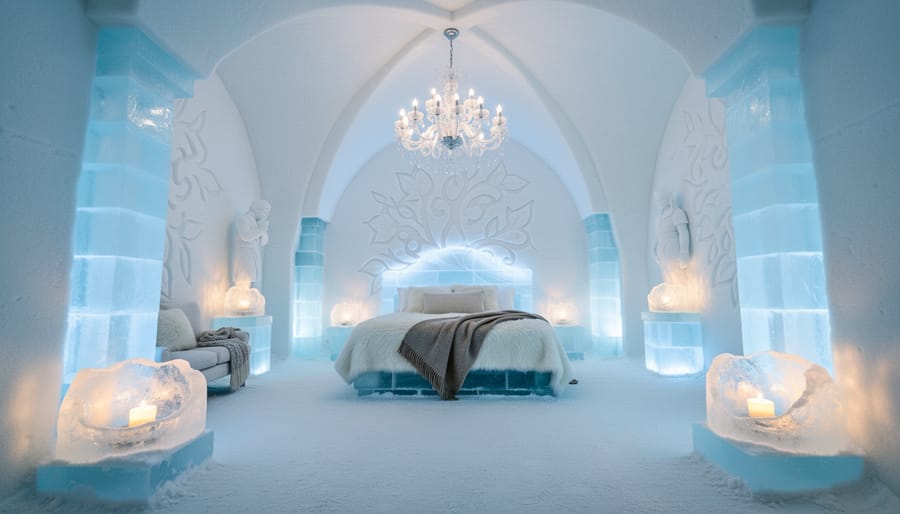
Every winter, Quebec’s Hôtel de Glace materializes like a frozen palace just north of Quebec City, 300 tons of ice and 15,000 tons of snow sculpted into a full-service hotel that exists for only four months before melting away. This isn’t a novelty overnight; it’s a meticulously crafted art installation you can sleep inside, complete with themed suites that change annually.
The hotel operates from early January through late March, when temperatures hold reliably below freezing. Guest rooms maintain a steady -3°C to -5°C, far warmer than outside but cold enough to preserve the architecture. You’ll sleep in an expedition-grade sleeping bag atop a wooden base draped with deer pelts, wearing thermal layers and a hat. Pro tip: keep tomorrow’s clothes inside your sleeping bag so they’re not frozen stiff come morning.
Themed suites feature intricate ice sculptures, past years have showcased everything from underwater scenes to celestial motifs. The ice bar serves cocktails in glasses carved from ice, and the sheer novelty of sipping vodka surrounded by glowing frozen walls creates Instagram moments at every turn.
Book well ahead for winter weekends. First-timers often opt for packages that include a warm hotel room for the night before or after, easing into the experience without committing to consecutive frozen nights.
2. Chase the Northern Lights in Yukon
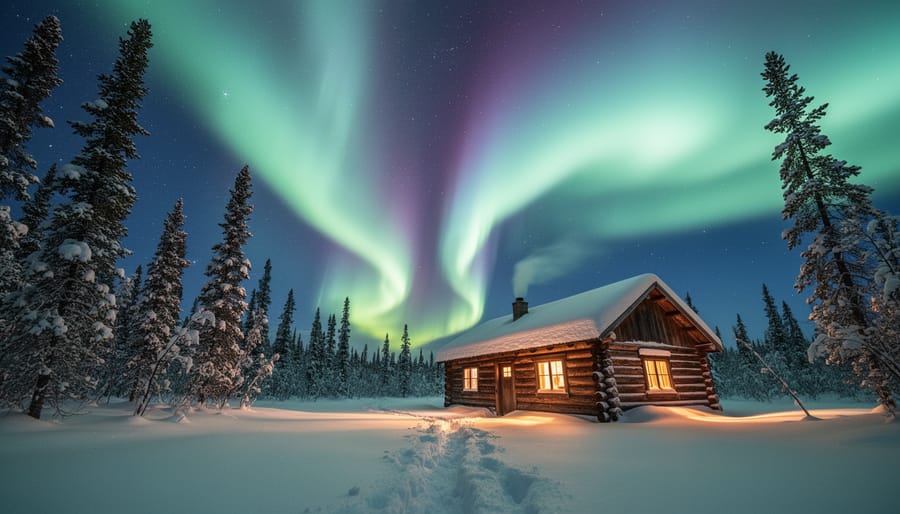
The Yukon Territory sits directly beneath the Aurora Oval, a ring-shaped zone where the Northern Lights appear most frequently and intensely. While other destinations claim good aurora viewing, Yukon delivers on an extraordinary scale, you’ll witness shimmering curtains of green, purple, and red light dancing across the entire sky, often so bright they cast shadows on the snow.
The best viewing window runs from late August through mid-April, with peak activity between 10 PM and 3 AM. December through February offer the longest nights and coldest, clearest skies, though you’ll need serious cold-weather gear for temperatures that can drop below -40°C. September and March provide milder conditions while still delivering spectacular shows.
Whitehorse serves as your base, with aurora tours departing nightly to heated viewing shelters outside the city. Local operators like Northern Tales and Aurora 360 provide transportation, hot drinks, and photography tips, essential since capturing the lights requires specific camera settings. Many lodges north of Whitehorse offer multi-night packages where you simply step outside your cabin when the lights appear.
What makes Yukon exceptional isn’t just the aurora’s frequency (visible roughly 240 nights per year) but the intensity. The magnetic field lines converge here, creating displays so vivid they seem close enough to touch.
3. Walk on the Ocean Floor in the Bay of Fundy
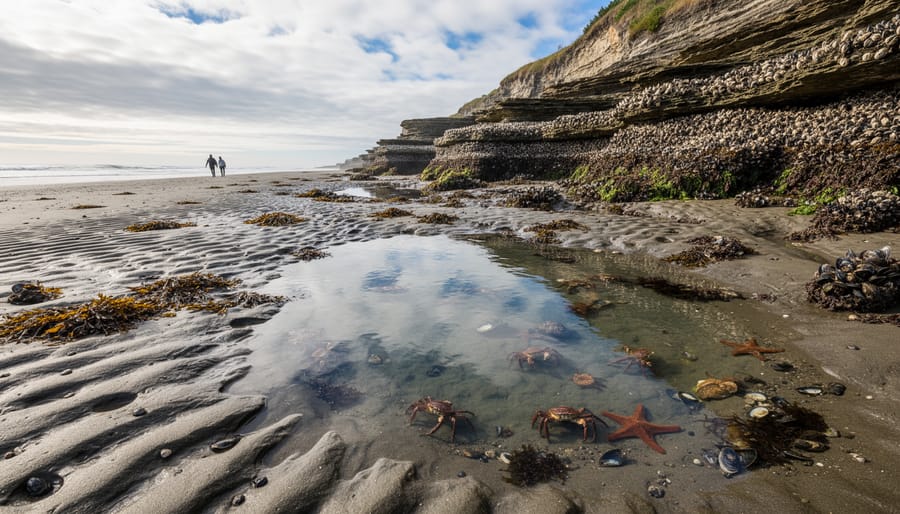
Walking on the ocean floor sounds like science fiction, but the Bay of Fundy makes it reality twice daily. This New Brunswick coastline experiences the world’s highest tides, water levels shift up to 16 meters (about 53 feet) between high and low tide. When the ocean retreats, it exposes a landscape that’s underwater for half the day.
You’ll walk across mudflats and seaweed-draped rock formations that were beneath 30 feet of water hours earlier. Look closely and you’ll spot periwinkles clinging to rocks, hermit crabs scuttling between tide pools, and sea stars in shallow depressions. The red sandstone cliffs and sea stacks create an otherworldly backdrop, carved by millennia of tidal action.
Timing is everything. You need to arrive during the two-hour window when the tide is fully out, which shifts daily based on the lunar cycle. Several outfitters offer guided walks at Hopewell Rocks and other access points, guides provide boots, explain the tidal science, and crucially, keep track of when the water returns. Never attempt this alone. The incoming tide moves faster than you’d expect, and the Bay of Fundy doesn’t forgive poor planning.
4. Kayak with Orcas in British Columbia
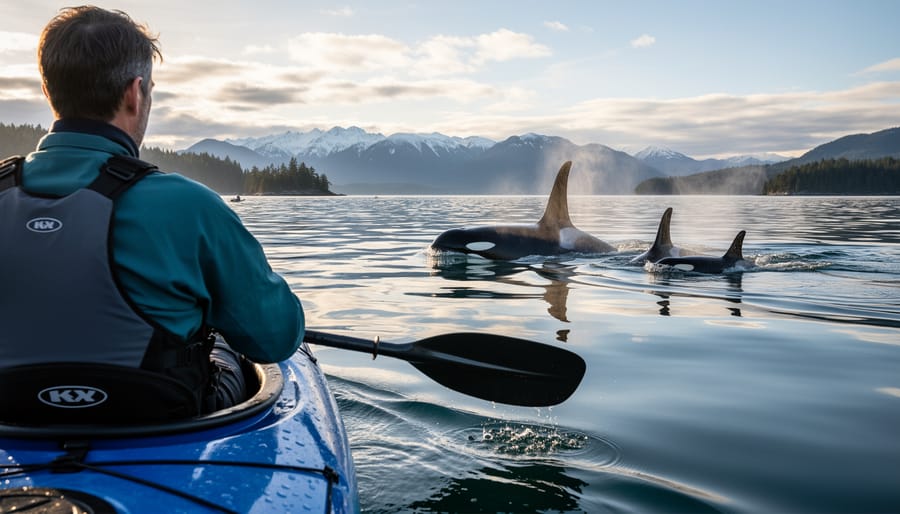
Gliding silently through the glassy waters of the Salish Sea while a dorsal fin slices the surface mere meters away ranks among the most humbling wildlife encounters on Earth. British Columbia’s coastal waters host three distinct orca populations, the fish-eating residents, transient mammal hunters, and offshore whales, making it one of the planet’s most reliable spots to paddle alongside these apex predators.
Summer months from June through September offer your best shot, when resident pods follow salmon runs through channels near the San Juan Islands and Johnstone Strait. Unlike motorized whale watching, kayaking lets you experience orcas on their terms. You’ll hear their blows, watch calves breaching beside mothers, and feel the power of their passage through your paddle.
Responsible operators maintain a 200-meter legal distance, but curious orcas often approach kayakers independently, a magical, unpredictable moment no tour company can guarantee. Guides read whale behavior constantly, repositioning groups to avoid disrupting feeding or resting patterns.
Choose multi-day expeditions over quick tours. Camping on remote islands between paddles dramatically increases your encounter odds and deepens the experience. The whales don’t perform on schedule; patience and respect for their space make the difference between a sighting and a genuine connection with one of the ocean’s most intelligent creatures.
5. Experience Tidal Bore Rafting in Nova Scotia
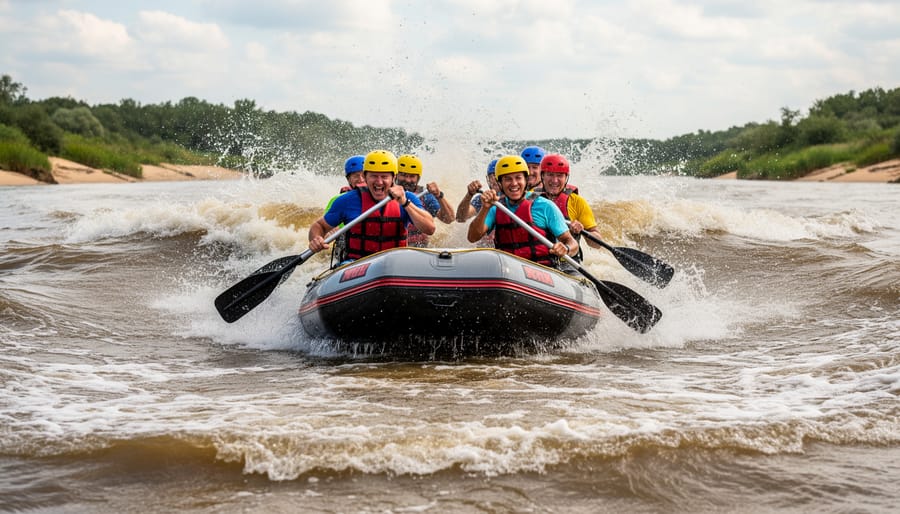
Twice a day, the Bay of Fundy’s massive tides send a wave surging backward up the Shubenacadie River, and you can ride it. Tidal bore rafting puts you on a Zodiac-style raft right in the path of this natural phenomenon, where the incoming tide crashes against the river’s outgoing current to create a churning wall of water up to three meters high.
The ride starts calm as guides position your raft in the river’s chocolate-brown waters. Then you hear it, a low roar growing louder as the bore approaches. When it hits, the raft climbs nearly vertical before plunging into turbulent rapids that toss you through standing waves for the next hour. You’ll get completely soaked in muddy water while gripping ropes as the raft spins and bounces through the chaos.
The strongest bores coincide with new and full moons, when tidal ranges reach their maximum. Summer months offer warmer conditions, though you’ll wear a wetsuit year-round. Most operators run trips twice daily timed to the tide tables, with the experience lasting two to three hours from start to finish.
6. Dine Inside a Cave in the Rockies
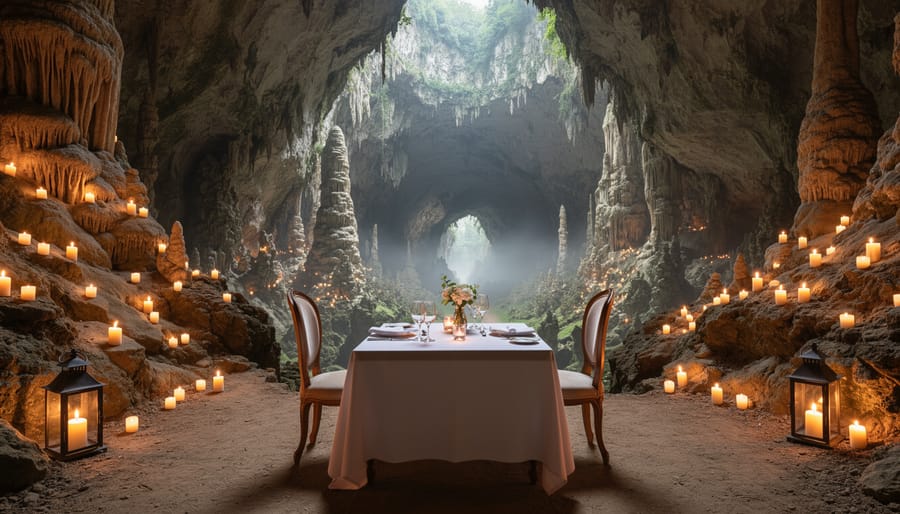
Imagine descending into a limestone cavern where candlelight flickers across ancient rock formations while you enjoy a multi-course gourmet meal. Alberta’s Drumheller region offers this surreal dining experience at the Atlas Coal Mine’s underground restaurant events, where tables are set deep within the cave system that once housed miners’ operations.
The ambiance is impossible to replicate above ground. Natural acoustics amplify the quiet clink of silverware, while stalactites create a prehistoric dining room ceiling that’s been forming for millennia. Temperature stays a constant cool 10°C year-round, so venues provide blankets, adding to the cozy, intimate atmosphere despite the vast geological space around you.
These aren’t everyday occurrences. Cave dinners typically run as special seasonal events (summer through early fall), often featuring local Alberta beef, foraged ingredients, and wine pairings that complement the dramatic setting. Some experiences include guided cave tours between courses, where you’ll learn about the geological history while working up an appetite.
Booking fills up months in advance since seating is limited by the cave’s natural capacity. The combination of culinary excellence and eating surrounded by 75-million-year-old rock creates a meal you’ll replay in conversation for years.
7. Float in Dead Sea-Style Waters at Little Manitou Lake
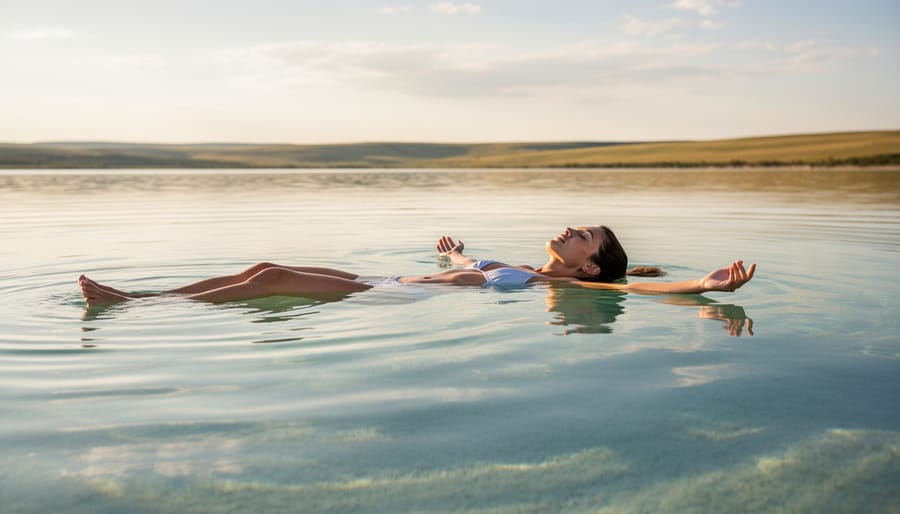
Saskatchewan’s Little Manitou Lake offers something you’d never expect to find in the Canadian prairies: water so saturated with minerals that you’ll float like a cork without any effort. Located about 120 kilometers southeast of Saskatoon, this small lake contains three times the salt concentration of ocean water, rivaling the famous Dead Sea.
The moment you wade in, you’ll feel the water’s unusual density. Lean back, and your body naturally buoys to the surface. It’s nearly impossible to sink, creating an almost surreal sensation as you bob weightlessly on the surface. The lake’s mineral cocktail includes magnesium, potassium, and sodium, which many believe offers therapeutic benefits for skin conditions and sore muscles.
Unlike the Dead Sea, you won’t need to travel overseas or navigate complex international travel. The lakeside village of Watrous provides accommodations and spa facilities that harness the mineral waters. Visit between June and September for the warmest water temperatures. Just remember: the high salt content stings if it gets in your eyes, and you’ll want to rinse off afterward. Bring water shoes, as the lakebed can be muddy in spots.
8. Walk the EdgeWalk Around Toronto’s CN Tower
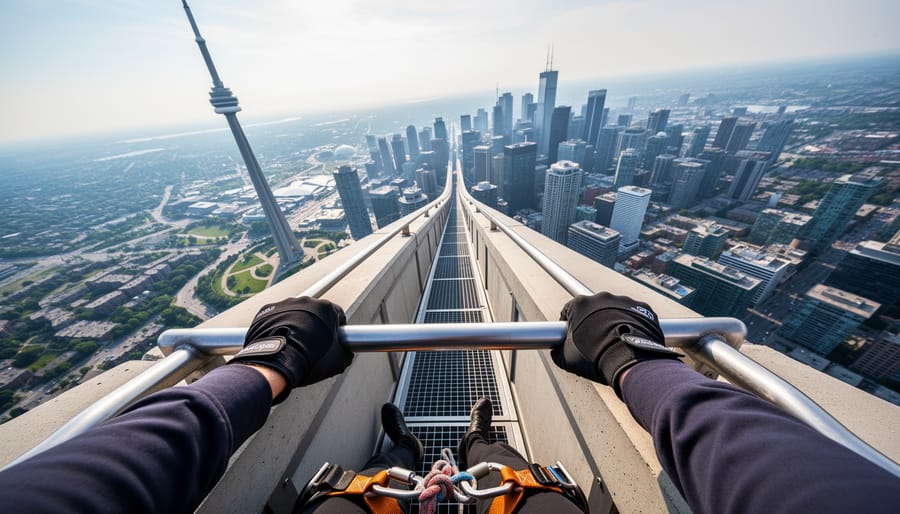
Standing 356 meters above Toronto’s bustling streets, EdgeWalk offers one of the world’s most exhilarating urban adventures. You’ll circle the CN Tower’s main pod on a 1.5-meter-wide ledge with nothing but a harness system between you and the city sprawling below, no handrails, no barriers, just open air.
The experience deliberately challenges your survival instincts. Guides encourage you to lean back over the edge at a 45-degree angle, your heels hanging off the platform while downtown Toronto tilts beneath your feet. On clear days, the 360-degree panorama stretches to Niagara Falls and across Lake Ontario to New York State. The glass floor of the observation deck suddenly seems tame by comparison.
Safety systems are redundant and rigorously tested. You’re attached via a trolley that runs on overhead rails, making it physically impossible to fall. Staff guide small groups through the 30-minute walk, allowing time for photos and that signature backward lean that looks terrifying in every shot.
EdgeWalk operates weather-permitting from late April through October. Participants must be at least 13 years old and meet height and weight restrictions. Book several weeks ahead for summer weekends, spots fill quickly as thrill-seekers and first-time visitors alike seek bragging rights to this bucket-list walk.
9. Snorkel with Belugas in Manitoba
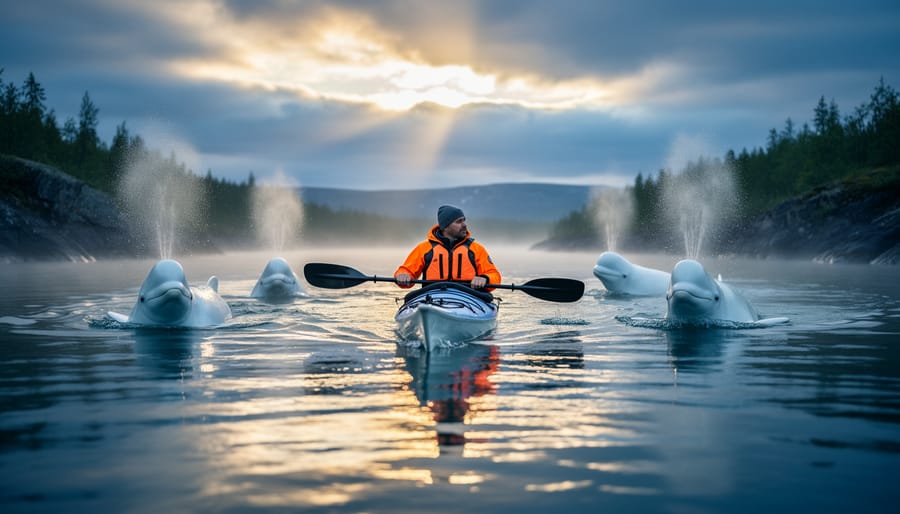
Few wildlife encounters rival the intimacy of floating face-to-face with wild beluga whales in their natural habitat. Churchill, Manitoba offers this extraordinary opportunity each July and August when approximately 3,000 belugas migrate into the Churchill River estuary’s warmer waters to feed and give birth.
Unlike boat-based whale watching, snorkeling puts you directly in the water with these curious marine mammals. Belugas often approach snorkelers voluntarily, swimming within arm’s reach while emitting their signature clicks, whistles, and chirps that earned them the nickname “canaries of the sea.” You’ll hear their vocalizations through your snorkel mask as they investigate you with genuine curiosity.
The experience demands preparation. Hudson Bay waters hover around 10-12°C even in summer, requiring operators to provide full dry suits that seal at wrists and neck. Tours include thermal layers, hoods, and gloves, plus flotation devices that keep you at the surface. Most outings last three to four hours including multiple water entries.
Encounters happen from zodiac-style boats that position snorkelers ahead of pods. The whales’ white coloring makes them easy to spot in the murky waters, and calves often swim alongside their mothers during these interactions.
10. Explore Underground in Montreal’s RÉSO
Beneath Montreal’s streets lies an entire city that never sees daylight. The RÉSO, also called the Underground City, spans 33 kilometers of interconnected tunnels linking metro stations, shopping centers, hotels, universities, and office towers. More than half a million people navigate this climate-controlled labyrinth daily during winter, making it the world’s largest underground pedestrian network.
What transforms a simple tunnel system into an adventure is getting deliberately lost. The RÉSO’s maze-like layout connects over 120 exterior access points across downtown. You’ll wander from upscale boutiques in Place Ville Marie to food courts beneath Complexe Desjardins, stumbling upon art installations, street performers, and hidden cafes along the way. The challenge isn’t just moving from point A to B, it’s discovering how seven shopping complexes, two train stations, and 10 metro stops fit together like an underground puzzle.
Visit during January’s brutal cold snaps when Montrealers joke that you can survive the entire winter without a coat. The network truly comes alive then, functioning as the city’s heated lifeline where locals grab coffee, meet friends, and commute without ever stepping outside.
11. Sail Through Iceberg Alley in Newfoundland
Watching a 10,000-year-old iceberg drift past your boat is an experience that defies description. Newfoundland’s northeast coast, nicknamed Iceberg Alley, offers front-row seats to one of nature’s most spectacular shows as massive ice sculptures calve from Greenland’s glaciers and float south on the Labrador Current.
The best viewing window runs from late May through early June, when hundreds of icebergs make their slow journey past coastal communities like Twillingate, St. Anthony, and Bonavista. These aren’t small chunks of ice, many tower five stories above the waterline, with 90 percent of their mass hidden beneath the surface. Each one is unique, carved by wind and waves into arches, spires, and otherworldly shapes that glow electric blue in the sunlight.
Tour operators offer everything from zodiac excursions that get you close enough to hear the ice creak and pop, to larger vessels with heated cabins for comfort. Early morning trips often provide the calmest waters and best light for photography. Some icebergs ground themselves near shore, allowing you to kayak around them or even collect “bergy bits” floating nearby, ancient ice that makes your evening drink especially memorable.
12. Take a Polar Bear Safari in Churchill
Churchill, Manitoba, earns its title as the “Polar Bear Capital of the World” for good reason, this subarctic town sits at the intersection of polar bear migration routes where hundreds of bears gather each fall waiting for Hudson Bay to freeze. Between late October and early November, these massive predators congregate along the coastline, creating one of the planet’s most spectacular wildlife viewing opportunities.
The experience unfolds from purpose-built tundra vehicles, massive enclosed buggies mounted on oversized tires that position you at eye level with bears while maintaining safe separation. From heated viewing decks, you’ll watch polar bears spar, sleep, and wander just meters away. Some mothers travel with cubs, while young males test their strength in mock battles that look surprisingly playful for animals that can weigh 1,500 pounds.
What sets Churchill apart is the sheer concentration and accessibility. Unlike fleeting Arctic encounters, multi-day tours virtually guarantee sightings, with some days bringing encounters with a dozen or more bears. Licensed operators follow strict protocols: vehicles never approach closer than regulations allow, engines stay running to enable quick movement if needed, and guides maintain constant radio communication.
October brings the largest crowds and highest bear numbers. Early November offers smaller tour groups and sometimes better photography light, though weather grows harsher. Either window delivers an encounter that redefined “wildlife safari” for a Canadian context.
13. Soak in Remote Hot Springs Accessible Only by Seaplane
British Columbia’s most exclusive hot springs lie hidden in roadless wilderness, reachable only by float plane or boat, making the journey itself part of the adventure. These geothermal pools, tucked into coastal rainforests and mountain valleys, offer something no resort spa can replicate: absolute solitude and water heated by the Earth itself, surrounded by old-growth cedars and snow-capped peaks.
The logistics add to the allure. You’ll board a seaplane in a place like Tofino or Port Hardy, skim over islands and inlets for 30 to 90 minutes, then land on pristine water steps from steaming pools. Some springs require a short hike from the dock; others sit right at the shoreline. Outfitters handle the flying and typically include wilderness hot spring access in multi-day adventure packages.
The payoff is immediate: slipping into naturally heated water (often 38-42°C) with nothing but forest silence and maybe an eagle overhead. Winter visits are especially magical, when steam rises into cold air and you’re guaranteed complete privacy. Similar experiences exist worldwide, but BC’s combination of coastal wilderness, First Nations history (some springs remain sacred sites, so research respectfully, just as you would before attending Indigenous festivals), and seaplane culture makes this uniquely Canadian.
14. Participate in a Traditional Indigenous Ceremony
Participating in a Traditional Indigenous ceremony offers profound insight into Canada’s First Nations, Métis, and Inuit cultures, experiences that connect you to thousands of years of living traditions. Across the country, Indigenous communities welcome respectful visitors to ceremonies like smudging (ritual cleansing with sacred medicines), sharing circles where participants speak from the heart, and vibrant powwows featuring traditional dancing, drumming, and regalia. These aren’t performances for tourists; they’re living practices that Indigenous peoples continue to honor, and your participation supports cultural preservation.
What makes these encounters truly unique is the learning that happens beyond words. You’ll understand the spiritual relationship between Indigenous peoples and the land, hear creation stories passed down through generations, and taste traditional foods prepared using ancestral methods. Many experiences include teachings about medicinal plants, the significance of the four directions, or the meaning behind specific dances and songs. Programs range from brief introductory workshops in urban centers like Toronto and Vancouver to multi-day immersions in remote communities. The best Indigenous tourism operators provide context about treaty rights, residential school impacts, and contemporary Indigenous life, creating space for meaningful cultural exchange rather than surface-level observation.
15. Zipline Across a Canyon in Quebec
Launching yourself across the Montmorency Falls gorge at speeds reaching 90 kilometers per hour delivers an adrenaline rush unlike any other Quebec adventure. The zipline spans 300 meters above the churning falls, placing you directly over the thundering water as mist rises to meet you mid-flight. Outfitters operate multiple canyon crossings throughout the province, including lines over the spectacular Sainte-Anne Canyon where you’ll soar 90 meters above the riverbed. The sensation combines the freedom of flight with the raw power of the waterfalls roaring beneath you, your heart pounds as you step off the platform, then exhilaration takes over as you glide across the void. Most zipline tours run from May through October when weather permits safe operations. Using the search functionality on Events Finder Canada helps you locate licensed operators, compare what to expect from different canyon courses, and filter by event categories for adventure activities. Weight restrictions typically range from 40 to 120 kilograms, and operators provide all safety gear including harnesses and helmets.
Planning Your Unique Canadian Adventure
Timing matters enormously for these adventures. Ice hotels operate January through March, polar bear safaris peak in October and November, while iceberg season runs April to June. Northern lights viewing spans September through April, and beluga snorkeling happens only during July and August’s brief Arctic summer. Book wildlife experiences and limited-capacity activities like EdgeWalk three to six months ahead, especially for summer travel.
Packing smart saves headaches. Layers work everywhere, even summer can turn chilly on the water or at elevation. Waterproof gear proves essential for ocean floor walks and tidal bore rafting. Hot springs adventurers need quick-dry swimwear, while polar bear watchers require serious cold-weather clothing (though operators often provide parkas). Don’t forget your camera and extra batteries; cold drains them quickly.
Finding trustworthy operators makes all the difference. Events Finder Canada’s platform connects you directly with official organizers for each of these experiences, complete with real-time availability, verified reviews, and transparent pricing. Check cancellation policies before booking, weather-dependent activities like northern lights tours and iceberg cruises sometimes need flexible dates. Many operators offer package deals that bundle accommodation with the experience, particularly for remote locations requiring flights or guided access.
From ice hotels to polar bear safaris, these 15 experiences showcase why Canada remains one of the world’s most extraordinary adventure destinations. Whether you’re floating effortlessly in Saskatchewan’s mineral waters, walking on the exposed ocean floor in New Brunswick, or ziplining across Quebec’s dramatic gorges, each adventure offers something genuinely unrepeatable.
The beauty of these experiences lies in their diversity. You don’t need to be an adrenaline junkie to create unforgettable memories, some of the most profound moments happen during quiet encounters with beluga whales or while participating in Indigenous ceremonies that connect you to thousands of years of tradition.
Which unique experiences are best for families?
Montreal’s underground RÉSO, the Bay of Fundy ocean floor walks, and Little Manitou Lake floating are excellent family-friendly options that work for various ages. The Ice Hotel and Montmorency Falls zipline also welcome families with age-appropriate children.
What’s the most affordable unique experience?
Walking the Bay of Fundy ocean floor and floating in Little Manitou Lake are among the most budget-friendly, often requiring only park admission or minimal fees. Montreal’s RÉSO exploration is completely free.
Do I need special skills for these activities?
Most experiences require no prior skills, guides and operators provide necessary training and equipment. Activities like kayaking with orcas offer beginner-friendly options alongside more advanced excursions.
When should I book these experiences?
Seasonal activities like northern lights viewing, iceberg tours, and polar bear safaris fill up months in advance. Book 3-6 months ahead for peak season adventures, especially if traveling during summer or holiday periods.
Ready to turn these dreams into reality? Events Finder Canada connects you directly with official organizers and verified tour operators across the country. Start planning your next extraordinary adventure today, Canada’s most unique experiences are waiting.